01
Modular NestJS Services & Data Boundaries
Structured backend capabilities as focused NestJS modules with explicit responsibilities. Designed relational data rules and transactional boundaries for workflows that touch related records.
A sanitized technical case study of how I approached a role-based operations platform: modular services, transactional data, integration boundaries, and automation—without publishing client data or operational metrics.
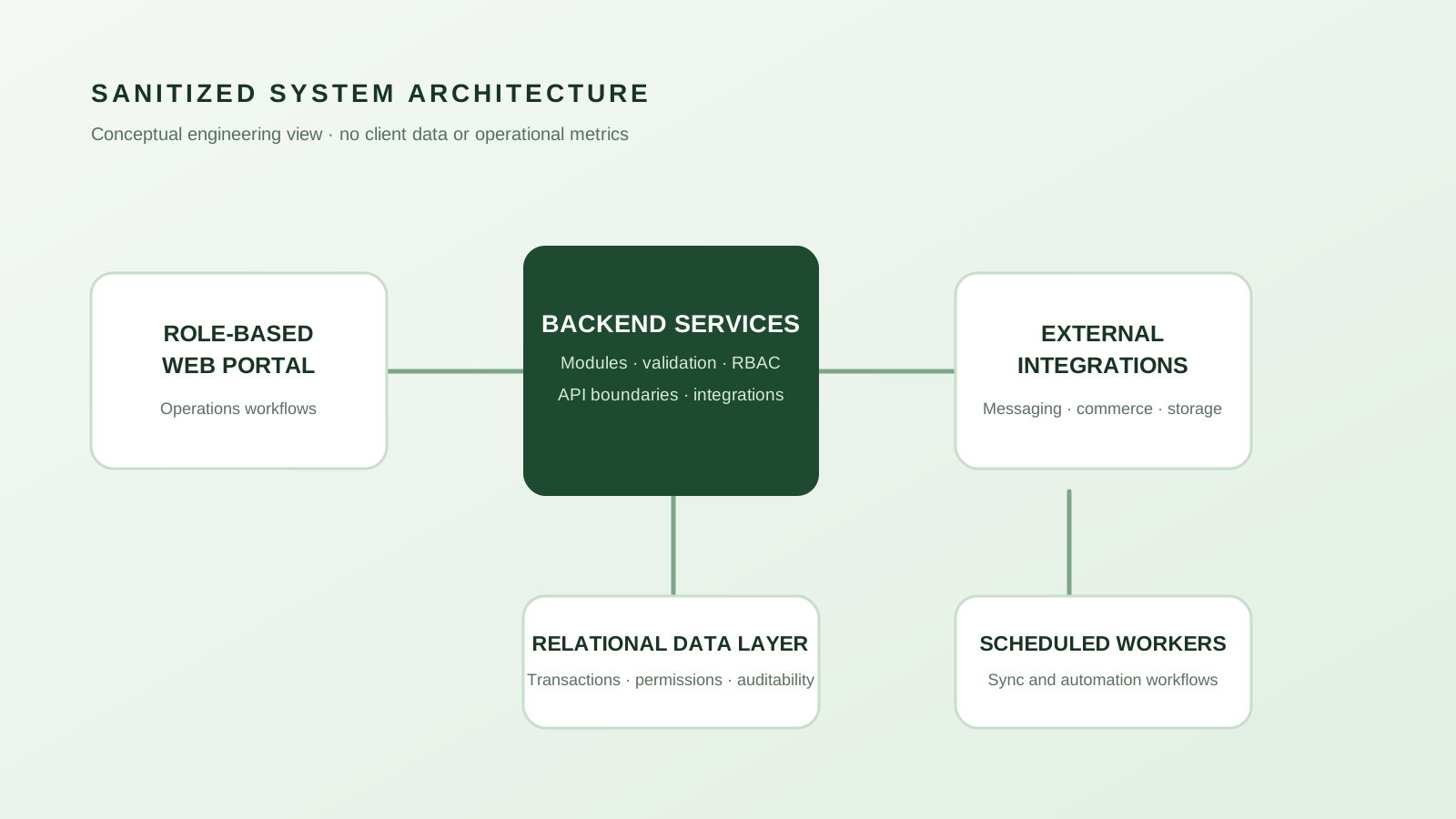
Separating connected operational workflows into maintainable NestJS modules without allowing one area to become tightly coupled to another.
Protecting data consistency when multiple role-based workflows can update related records.
Keeping external API work out of request-response paths so user-facing workflows remain predictable.
Creating integration boundaries that can be monitored, retried, and changed without exposing internal implementation or client data.
Structured backend capabilities as focused NestJS modules with explicit responsibilities. Designed relational data rules and transactional boundaries for workflows that touch related records.
Designed permissions and workflow boundaries so the portal can provide the right operational actions to the right roles without relying on a single, over-privileged interface.
Implemented scheduled jobs for external synchronization and automation, keeping long-running integration work separate from interactive dashboard requests.
Created backend service boundaries for approved third-party integrations, with validation and error handling designed to prevent external failures from corrupting core operational workflows.
Connected the backend capabilities to a role-based web interface so operational users can complete their work without needing access to infrastructure or integration credentials.
Reach out with your technical requirements or timeline for a rapid architecture audit.
Hiring for a backend role or need an experienced engineer for a long-term engagement? Share the context and preferred hiring arrangement.